What Is Autism Level 1: Signs, Traits & Support Needs Explained
Decoding the terms around autism can feel like learning a new language. You might be here because you or someone you love has always felt a bit "different" but never quite fit the stereotypical image of autism. Perhaps you’ve heard the term "Level 1" and are wondering: what is autism level 1, and how does it relate to the older term "Asperger's"?
This guide is designed to cut through the confusion. We will break down the official definitions, explore the unique traits of Level 1 autism in adults, and discuss the "hidden" struggle of masking. You will find practical checklists and clear explanations to help you understand what "requiring support" really means in daily life. If you are curious about your own traits, you can also take our autism test to get a preliminary analysis.
Understanding the Definition: What Does "Level 1" Actually Mean?
When the DSM-5 (Diagnostic and Statistical Manual of Mental Disorders) was updated in 2013, it changed how we diagnose autism. Instead of separate labels like "Asperger's" or "PDD-NOS," everything was brought under one umbrella: Autism Spectrum Disorder (ASD). To help clarify the diversity within this spectrum, clinicians now use three "levels" based on how much support a person needs.
So, what is autism level 1 specifically? It is defined as "requiring support." This is the profile with the lowest support needs compared to Levels 2 and 3. However, "lowest support" does not mean "no support." People with Level 1 autism face genuine challenges in social communication and flexibility that can impact their independence and well-being without the right strategies in place.
Defining the Spectrum: It’s Not a Linear Line
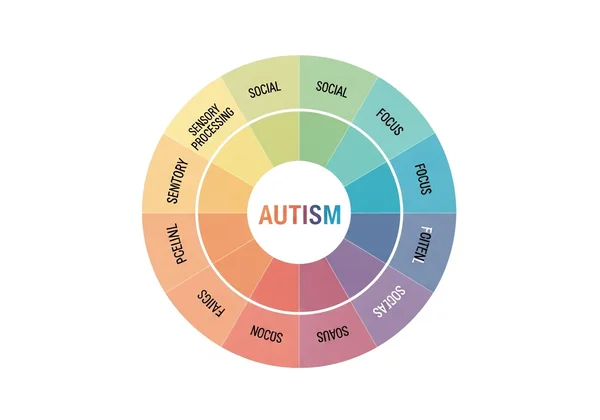
A common misconception is that the autism spectrum is a straight line from "mild" to "severe." In reality, it is more like a color wheel or a pie chart. A person with Level 1 autism might have high verbal skills (a "strength" area) but struggle significantly with sensory processing or executive function (a "support need" area).
This means two people with the same Level 1 diagnosis can look very different. One might be a talkative professor who misses social cues, while another might be a quiet artist who gets overwhelmed by loud noises. The "level" is a snapshot of their current support needs, not a permanent measure of their worth or potential.
What "Requiring Support" Looks Like in Reality
The phrase "requiring support" can be vague. In practical terms, for Level 1, this often means:
- Socially: You might be able to speak in full sentences but struggle to initiate conversations or understand unwritten social rules. Without support, social interactions can feel awkward or exhausting.
- Behaviorally: You might struggle with transitions between activities. Switching from work mode to home mode, or handling a sudden change in plans, can cause significant stress or a "shutdown."
- Organization: You might need help with executive function tasks, like planning a project, keeping a schedule, or managing daily chores, even if you are highly intelligent.
Is Level 1 Autism the Same as Asperger’s Syndrome?
This is one of the most common questions we hear. For decades, "Asperger’s Syndrome" was the go-to diagnosis for people with average or above-average intelligence who had autistic traits but no speech delay.
Why the Terminology Changed in 2013
The DSM-5 removed Asperger’s as a separate diagnosis to create a more consistent and scientifically valid system. Research showed that the distinction between "High-Functioning Autism" and "Asperger’s" was often inconsistent across different clinics.
Today, if you were diagnosed with Asperger’s in the past, your diagnosis would likely be Autism Spectrum Disorder, Level 1. The clinical label has changed, but your traits and identity remain the same.
Identifying with the "Aspie" Label Today
Even though the medical manual has changed, many people still identify with the term "Aspie" or "Asperger’s." It connects them to a specific community and history. It is perfectly okay to use the term that feels right for you socially, while understanding that what is autism level 1 is the terminology you will see in medical paperwork and insurance forms.
Common Autism Level 1 Symptoms: A Checklist of Traits
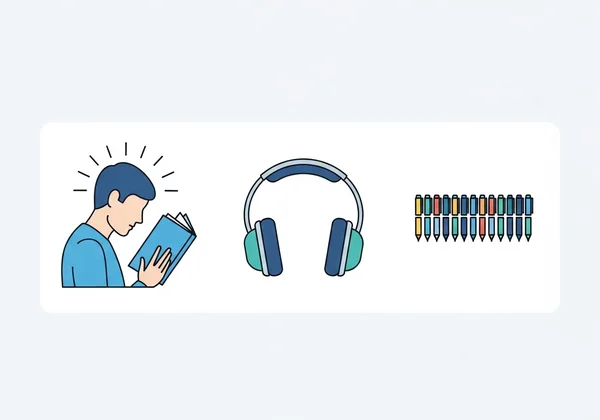
If you are wondering if this profile fits you, looking at specific traits can be helpful. Keep in mind that you don’t need to have every trait on this list to be autistic. These are simply common patterns found in Level 1 autism.
Social Communication Challenges
- Literal Thinking: You often take phrases literally. Sarcasm, idioms, or "reading between the lines" can be confusing.
- Conversation Flow: You might find it hard to know when it’s your turn to speak, leading to interrupting others or staying overly quiet.
- Eye Contact: Making eye contact might feel intense, unnatural, or distracting when you are trying to listen.
- Small Talk: You may find "small talk" pointless or draining, preferring to jump straight into deep or factual topics.
Restrictive and Repetitive Behaviors
- Intense Interests: You have "special interests" that you are passionate about. You could talk about them for hours and find them deeply regulating.
- Need for Routine: You prefer doing things in a specific order. If your morning routine is disrupted, it can throw off your entire day.
- Stimming: You engage in repetitive movements to manage energy or stress, like tapping your foot, twirling hair, or pacing.
Sensory Sensitivities (Lights, Sounds, Textures)
- Hypersensitivity: Loud noises (like a vacuum), bright fluorescent lights, or scratchy clothing tags can be physically painful or overwhelming.
- Hyposensitivity: Conversely, you might not notice when you are hungry, thirsty, or cold until it becomes extreme.
Level 1 Autism in Adults: The Hidden Struggle of Masking
For many adults, what is autism level 1 isn't just about the traits listed above—it's about the effort taken to hide them. This is known as "masking" or "camouflaging."
The Exhaustion of "Fitting In" (Masking)
Masking is a survival strategy. It involves consciously suppressing your natural autistic instincts to fit in with neurotypical expectations. Examples include:
- Forcing yourself to make eye contact even when it hurts.
- Scripting conversations in your head before they happen.
- Suppressing the urge to stim (fidget) during a meeting.
While masking can help you navigate social situations, it is incredibly draining. Many adults with Level 1 autism report feeling like they are "acting" all day long. This can lead to autistic burnout, a state of chronic physical and mental exhaustion caused by the prolonged stress of masking.
Workplace and Relationship Dynamics
In the workplace, an adult with Level 1 autism might be a top performer due to their focus and skill but struggle with "office politics" or team-building happy hours. In relationships, partners might misinterpret a need for alone time as rejection, when it is actually a necessary recovery period from sensory overload. Understanding these dynamics is key to finding balance.
Strengths and Unique Traits: The Positive Side of Level 1
It is crucial to remember that autism is a difference in neurotype, not just a collection of deficits. The autistic brain is wired differently, and this wiring comes with unique strengths.
Deep Focus and Pattern Recognition
Many people with Level 1 autism have an incredible ability to hyper-focus on tasks that interest them. This "monotropism" allows for deep dives into subjects, leading to expertise and innovation. Your brain might naturally spot patterns, anomalies, or details that others miss, making you excellent at problem-solving, coding, editing, or artistic endeavors.
Honesty, Loyalty, and Attention to Detail
Socially, the autistic tendency toward literalness often translates into profound honesty and integrity. You are likely someone who means what they say. In friendships and relationships, this can create a foundation of deep trust and loyalty, free from manipulation or mind games.

From Reading to Understanding: Exploring Your Own Traits
Reading a list of symptoms is a great first step, but it can sometimes leave you with more questions than answers. You might relate to the sensory issues but not the social ones, or vice versa. Human behavior is complex, and a static checklist can't capture the nuance of your lived experience.
Why a Checklist Can Only Tell You So Much
A checklist is binary: you either have the trait or you don't. But autism is a spectrum of intensity and frequency. A checklist doesn't ask how much eye contact drains you, or how often a change in routine ruins your day. To truly understand your neurotype, you need a tool that can look at the patterns in your answers.
Try Our Interactive Screening Tool
If you are looking for a clearer picture, consider using a structured screening tool. Unlike a simple blog post, an interactive tool can weigh your responses to provide a personalized analysis.
You can take our free autism test to explore your traits in a private, pressure-free environment. This tool is designed to be educational, helping you reflect on your behaviors and feelings across different contexts. It generates an AI-powered report that breaks down your results, offering insights rather than just a score.
When to Seek Professional Diagnosis
Remember, online tools are for screening and educational purposes. They help you organize your thoughts and validate your experiences. However, they cannot provide a medical diagnosis. If you need accommodations for work or school, or if your traits are causing significant distress, we recommend sharing your results with a qualified psychologist or psychiatrist for a formal evaluation.
Level 1 vs. Level 2 and 3: Comparing Support Needs
To fully grasp what is autism level 1, it helps to see it in context with the other levels. The main difference lies in the amount of support required.
Key Differences in Social Support Needs
- Level 1 (Requiring Support): You can speak in full sentences and engage in communication, but back-and-forth conversation can fail. You might appear "odd" or struggle to make friends.
- Level 2 (Requiring Substantial Support): You might speak in simple sentences or have limited verbal communication. Social interactions are limited to narrow interests, and your social impairments are apparent even with support in place.
- Level 3 (Requiring Very Substantial Support): You might have few words or be non-speaking. Initiating social interaction is very limited and only to meet immediate needs.
Variances in Repetitive Behaviors
- Level 1: Inflexibility causes significant interference with functioning in one or more contexts. You have difficulty switching between activities.
- Level 2: Inflexibility, coping with change, or other restricted behaviors appear frequently enough to be obvious to the casual observer and interfere with functioning in a variety of contexts.
- Level 3: Inflexibility of behavior, extreme difficulty coping with change, or other restricted/repetitive behaviors markedly interfere with functioning in all spheres. Great distress on changing focus or action.
Embracing Your Unique Neurotype
Understanding what is autism level 1 is often the first step in a journey of self-discovery. If you see yourself in these descriptions, know that there is nothing "wrong" with you. You simply have a brain that prioritizes information differently.
Recognizing your traits allows you to stop fighting against your nature. Instead of forcing yourself to mask until you burn out, you can start building a life that supports your needs—whether that means wearing noise-canceling headphones, scheduling downtime, or communicating your communication style to loved ones.
Knowledge is power. If you are ready to learn more about your unique profile, explore our autism test online to gain deeper insights into your traits and start your journey toward self-acceptance.
Frequently Asked Questions About Level 1 Autism
Can adults with Level 1 Autism live independently?
Yes, many adults with Level 1 autism live fully independent lives, hold jobs, and have families. However, "independent" does not mean "without help." Many benefit from specific supports, such as therapy, executive function coaching, or workplace accommodations, to maintain their well-being and prevent burnout.
Is Level 1 Autism considered a disability?
Legally and medically, yes, Autism Spectrum Disorder (including Level 1) is classified as a disability. This classification is important because it provides legal protection against discrimination and grants the right to reasonable accommodations in school and work. Many in the community view it through the social model of disability—meaning the "disability" comes from a mismatch between the autistic person and an unaccommodating environment.
Can Level 1 Autism be mistaken for ADHD?
Yes, this is very common. Both ADHD and Level 1 autism share traits like executive dysfunction, sensory sensitivities, and social differences. It is also possible to have both (often called "AuDHD"). If you feel an ADHD diagnosis doesn't explain everything, looking into autism traits is a valid next step.
Can Level 1 Autism be cured?
No, and it doesn't need to be. Autism is a neurodevelopmental difference, meaning it is part of how your brain is built. It is not an illness. The goal of "treatment" is not to cure autism but to support the person in navigating a world built for neurotypical brains, reducing distress, and maximizing their quality of life.
Does Level 1 Autism get worse with age?
Autism itself is not degenerative; your brain wiring doesn't change. However, symptoms can appear to get worse due to burnout or increased life demands (like moving out, starting a career, or having kids). When the demands exceed a person's coping capacity, they may experience "autistic regression" or skill loss, which is usually temporary and resolves with rest and support.