Non Verbal Autism Symptoms, Communication, and Support
Non verbal autism is often searched by parents, partners, teachers, and autistic people who want a plain-language explanation of what limited or absent speech may mean. The phrase usually refers to an autistic person who does not use spoken words reliably for everyday communication. Many people now prefer "nonspeaking" or "minimally speaking" because speech is only one way to communicate, and absence of speech does not mean absence of thought, understanding, preference, humor, or personality.
This guide explains common signs, possible reasons speech may be limited, support options, and what questions to bring to a qualified professional. If you are also trying to understand broader autism-related traits in yourself or someone age 13 or older, a private autism traits self-screening resource can be a gentle place to organize observations before seeking individual guidance.
What Non Verbal Autism Means
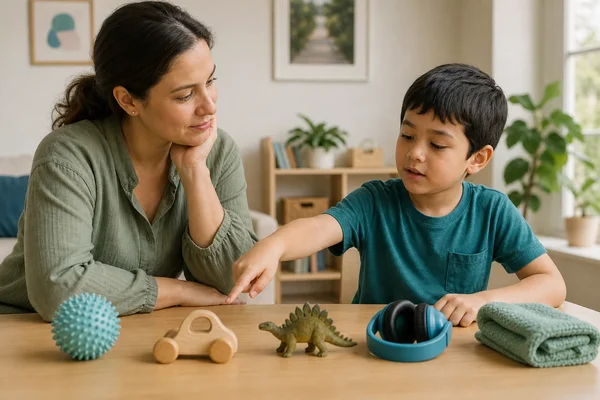
Non verbal autism is not a separate autism type in the way many search results make it sound. It is a descriptive phrase for an autistic person whose spoken language is absent, very limited, inconsistent, or not functional enough for daily needs. One person may use no spoken words. Another may say a few words, repeat phrases, sing, script lines from media, or speak during calm moments but lose speech during overload.
That is why "non verbal" can be imprecise. Some people understand spoken language well but cannot produce speech on demand. Some communicate by typing, pointing, signing, using picture cards, using a speech-generating device, moving toward or away from objects, or showing emotion through body movement. Others are still building the shared-attention and symbolic communication skills that often come before speech.
It also helps to separate speech from language and communication. Speech is the motor act of producing sounds. Language is the system of words, symbols, meaning, and grammar. Communication is broader: it includes requesting, refusing, choosing, greeting, sharing attention, asking for help, and expressing discomfort. A person can have little speech and still communicate in meaningful ways.
For readers comparing online information with their own observations, an AQ-style autism traits screener may help frame questions about social communication patterns, routines, sensory differences, and daily-life traits. It is not a substitute for an individualized evaluation, but it can support reflection.
Non Verbal Autism Symptoms and Early Signs
Non verbal autism symptoms are usually communication patterns seen alongside broader autism traits. They may be noticed in toddlerhood, childhood, adolescence, or adulthood, depending on the person's development, support access, and environment.
Signs in toddlers and young children
In young children, caregivers may notice limited babbling, few spoken words after the expected language window, little use of pointing or showing objects, reduced response to name, limited imitation, or difficulty using gestures to request help. A child may pull an adult toward an item instead of pointing, cry when needs are unclear, or rely on routines because spoken choices are hard to express.
These signs do not automatically mean autism. Hearing differences, motor speech conditions, developmental delay, anxiety, trauma, language exposure, and other factors can affect speech. What matters is the full pattern: social communication, play, gestures, sensory responses, flexibility, behavior, and learning profile.
Signs in teens and adults
Non verbal autism in adults and teens may look different from childhood descriptions. Some people use AAC, typing, text-to-speech apps, gestures, writing, or trusted communication partners. Others may speak sometimes but become nonspeaking during shutdown, burnout, sensory overload, pain, or stress. A person may also need extra time to process questions and may communicate more clearly when pressure is reduced.
Adults who are nonspeaking are sometimes underestimated. Limited speech should not be treated as proof of low intelligence, lack of awareness, or lack of consent. Supportive communication means giving time, offering choices, checking preferences respectfully, and assuming the person has something to communicate.
What Causes Non Verbal Autism
There is no single known cause of non verbal autism. Autism itself reflects differences in brain development, and speech outcomes vary widely. Limited speech may be connected with social communication development, motor planning, sensory processing, cognitive profile, anxiety, seizures, hearing status, sleep, access to therapy, and the fit between the person and their communication supports.
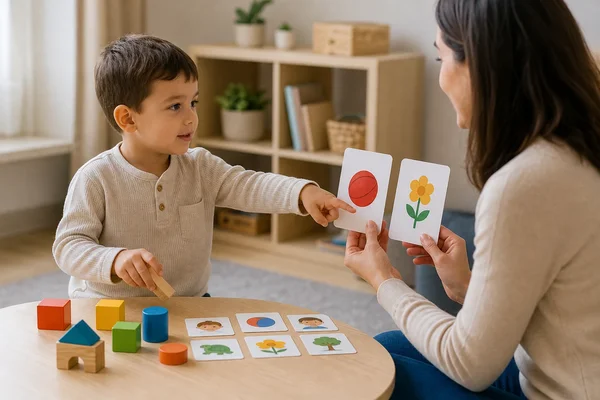
Some children need more time to build pre-language skills such as shared attention, imitation, turn-taking, gesture use, symbolic play, and understanding that a picture, sign, object, or sound can stand for something else. Some may understand far more than they can express. Others may have language comprehension challenges as well as expressive speech challenges.
This is why a broad evaluation is often more useful than a single label. Families can ask about hearing checks, speech-language assessment, occupational therapy needs, developmental history, learning profile, sensory patterns, and whether AAC should be introduced. For adults, the same principle applies: the goal is not to force speech as the only valid outcome, but to understand access, comfort, autonomy, and daily communication needs.
Searchers also ask about "non verbal autism ICD 10" or "level 3 non verbal autism." In formal records, speech level may be described alongside autism, language impairment, intellectual disability if present, or support needs. Speech level alone does not decide a person's autism level, needs, strengths, or future.
Can Non Verbal Autism Improve
Non verbal autism can change over time, but improvement should be defined carefully. Some autistic children later use single words, phrases, or conversational speech. Some remain nonspeaking and become strong communicators through AAC, signs, picture systems, writing, typing, body signals, or a mix of methods. Some people move between speech and nonspeech depending on energy, sensory load, health, and stress.
The most helpful question is often not "Will they talk?" but "How can communication become easier, richer, and more reliable?" Speech may be one goal for some people. Functional communication, safety, choice-making, relationships, school participation, work access, and emotional expression are also meaningful goals.
"Recovery" is a common related search, but it can lead families toward the wrong expectation. Autism is a lifelong neurodevelopmental profile. A child may gain speech, reduce frustration, learn new skills, or need less support in some situations, but that is not the same as erasing autism. A respectful plan focuses on communication access and quality of life.
Communication Supports, Therapy Options, and Daily Tools
Support for non verbal autism works best when it is individualized and practical. A speech-language pathologist can evaluate expressive language, receptive language, speech motor skills, play, social communication, and AAC options. Occupational therapists may help with sensory regulation, body awareness, and daily routines. Educators and caregivers can help by using the same supports across home, school, community, and appointments.
AAC, sign, and picture supports
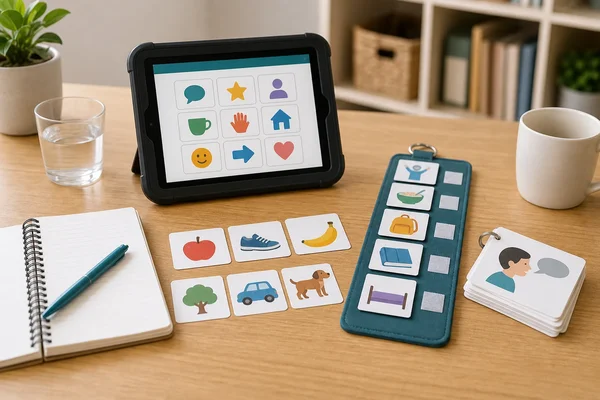
AAC stands for augmentative and alternative communication. It can include gestures, manual signs, object choices, picture boards, visual schedules, communication cards, letter boards, tablets, or speech-generating devices. Low-tech and high-tech supports are not opposites; many people need several options because communication needs change by setting.
AAC is not a last resort. For many people, it reduces frustration and gives language a visible, usable form. It can also support speech development for some people by making communication less pressured. A child who can point to "drink," "break," or "hurt" has a clearer way to be understood. An adult who types responses may be able to participate in choices that spoken conversation made difficult.
Everyday interaction tips
Helpful interaction is usually calm, patient, and concrete. Offer real choices instead of open-ended pressure. Pair spoken words with visuals or gestures. Pause long enough for processing. Watch for body signals, movement toward objects, facial expressions, changes in breathing, or attempts to leave. Reduce background noise when possible. Avoid asking repeated rapid questions when a person is already overloaded.
It can also help to model communication without demanding immediate imitation. For example, point to a picture while saying the word, use a sign while offering the item, or show the device button before expecting the person to use it. Celebrate any clear communication, including refusal. A reliable "no" is an important skill.
Good goals for non verbal autism might include requesting a break, choosing between two activities, telling someone about pain, greeting a familiar person, answering yes/no, using a visual schedule, or participating in a class or job routine. Goals should be useful in real life, not only measurable during a session.
What Non Verbal Autism Does Not Tell You
The phrase non verbal autism does not tell you how much a person understands. It does not tell you whether they can learn, love, joke, make choices, use technology, enjoy friendships, or have opinions about their own support. It also does not tell you whether autism is "severe" by itself.
Some nonspeaking autistic people have high support needs across many parts of life. Others have uneven profiles: limited speech but strong reading, memory, visual thinking, music, pattern recognition, or problem solving. Many have sensory or motor barriers that make typical conversation harder than their inner language skills might suggest.
The safest assumption is respectful competence: speak naturally, offer accessible communication, check for understanding without babying, and do not talk about the person as if they are absent. If you are supporting a child, also protect privacy. A child's communication struggles should not become public content without careful thought about dignity and consent.
When Non Verbal Autism Raises Broader Questions
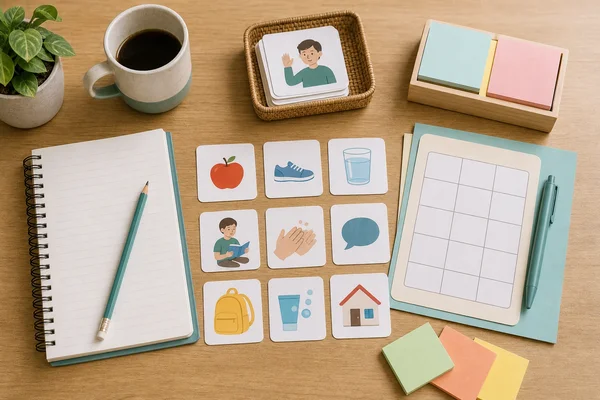
If non verbal autism is part of a wider pattern of social communication differences, sensory sensitivities, repetitive behaviors, rigid routines, intense interests, or daily-life challenges, it may be worth organizing observations before an appointment. Write down when speech is easiest, when it disappears, which supports help, what triggers overload, how the person communicates pain or refusal, and what strengths show up when pressure is lower.
For people age 13 or older who are exploring autism traits, a supportive online autism traits check can help turn scattered observations into a clearer reflection. Use it as educational context, then bring questions to a qualified professional, school team, speech-language pathologist, or other relevant provider when individual support decisions are needed.
FAQ
Can non-verbal autistic people speak?
Some can speak a little, some speak later, some speak inconsistently, and some do not use spoken language. "Non verbal" often means spoken words are not reliable for daily communication, not that the person has no thoughts or no way to communicate.
Can non verbal autism improve?
Communication can improve with the right supports. Improvement may mean more speech, better AAC use, clearer gestures, fewer communication-related frustrations, or more participation in daily life. The best goals are practical and person-centered.
Is non verbal autism severe?
Not always in a simple way. Limited speech may appear with high support needs, but speech level alone does not measure intelligence, awareness, personality, or potential. A full picture includes communication, learning, sensory needs, health, autonomy, and daily support.
Is non verbal autism permanent?
It varies. Some children later use spoken words or phrases, some become fluent speakers, some remain nonspeaking, and some use speech only in certain settings. Reliable communication access matters at every stage, even when speech is also being supported.
What is the life expectancy of a nonverbal autistic person?
Speech level alone does not determine life expectancy. Health conditions, safety risks, epilepsy, mental health, access to care, communication access, and daily support all matter. Specific concerns should be discussed with a qualified medical professional who knows the person.
How do you communicate with someone with non verbal autism?
Use respectful language, slow the pace, offer choices, allow extra processing time, and support AAC, pictures, signs, writing, gestures, or devices. Watch for nonspoken signals and treat refusal, preference, and discomfort as meaningful communication.
Is nonverbal learning disorder the same as autism?
No. Nonverbal learning disorder and autism are different concepts, although some traits can overlap. Nonverbal learning disorder usually refers to a pattern involving visual-spatial, social, or motor challenges, while autism involves broader social communication differences and restricted or repetitive patterns.