How to Get Tested for Autism: Start with a Free Online Autism Test, Then Diagnosis Steps & Costs
Navigating the path to understanding yourself or a loved one better can be full of questions. Perhaps you’ve noticed certain traits or challenges that resonate with descriptions of Autism Spectrum Disorder (ASD). You might have even taken a preliminary online screening and are now wondering what to do with the results.
You’ve taken that first step, and now you’re asking: what’s next? This guide is here to help. Pursuing a formal diagnosis can feel complex. But it doesn't have to overwhelm you. We'll guide you step-by-step: from spotting the need, to costs, to finding support.
An online screening, like the reliable autism test we offer, is an excellent starting point. It provides valuable insights into your traits. This article will help you understand how to use that information to take the next confident step toward official clarity.
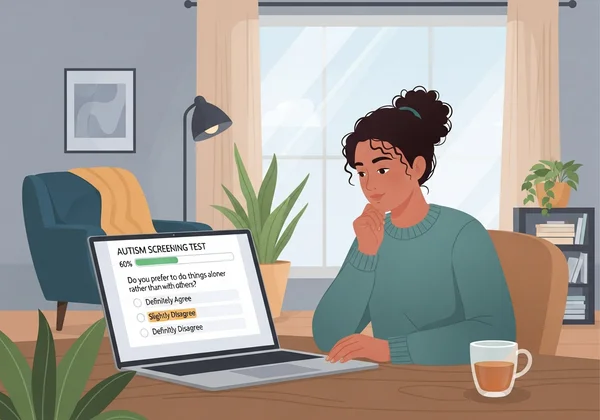
Understanding the Professional Autism Diagnosis Process
A professional diagnosis is very different from an online screening. A screening tool flags potential traits, but a formal diagnosis is a comprehensive evaluation conducted by a qualified healthcare expert. It is the only way to receive an official determination of Autism Spectrum Disorder.
Recognizing the Need for a Formal Assessment
Why move from an online score to a full evaluation? An official diagnosis can be a key to unlocking understanding and support. It can provide:
- Self-Understanding: A diagnosis can offer a new framework for understanding your life experiences, strengths, and challenges. It can bring a sense of relief and validation.
- Access to Support: Many therapies, support services, and educational programs require a formal diagnosis to qualify.
- Workplace or School Accommodations: A diagnosis is often necessary to receive legal protections and accommodations that can help you succeed in academic or professional environments.
- A Path Forward: It provides a clear basis for developing strategies to navigate social situations, manage sensory sensitivities, and improve overall well-being.
An online test result is a signpost pointing you in a direction. A formal assessment is the detailed map that shows you the terrain ahead.
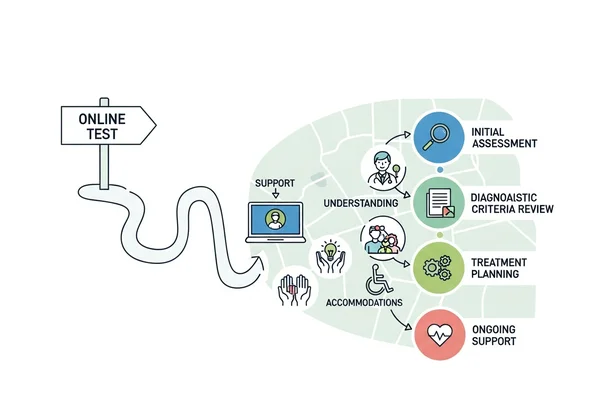
Finding Qualified Professionals: Who Can Diagnose Autism?
Only specific licensed healthcare professionals are qualified to diagnose autism. Your search should focus on experts who specialize in neurodevelopmental conditions. These specialists include:
- Clinical Psychologists: They are trained in psychological testing and can conduct comprehensive diagnostic evaluations for people of all ages.
- Psychiatrists: As medical doctors, they can diagnose autism and also rule out or identify co-occurring conditions. They can also prescribe medication if needed.
- Developmental Pediatricians: These doctors specialize in the development of children and are a primary resource for diagnosing autism in young people.
- Neurologists: These specialists focus on the brain and nervous system and can be involved in the diagnostic process, especially for ruling out other neurological conditions.
Start your search here: Ask your primary doctor for a referral. Check your insurance for in-network specialists. Or contact local autism groups.
Preparing for Your Autism Evaluation Appointment
Being prepared for your appointment can help you feel more confident and ensure the process is as smooth as possible. The goal is to give the clinician a complete picture of who you are.
Consider gathering the following:
- A List of Your Traits: Write down specific examples of your social communication patterns, sensory sensitivities, routines, and special interests.
- Developmental History: If possible, gather information about your early childhood milestones, such as when you started speaking and interacting with others. For parents, this includes school reports and notes.
- Your Questions: Prepare a list of questions you have for the clinician about the process, the diagnosis, and what comes next.
- Screening Results: Bring the summary from any online tests you have taken. This can provide a useful starting point for the conversation. Before you go, you can try our free tool to gather your thoughts.
What to Expect During an Autism Evaluation
A professional autism evaluation is not a single test but a series of observations, interviews, and assessments. The process is designed to be thorough and can take several hours, sometimes split across multiple appointments.
Common Assessment Tools and Methods Used
Clinicians use standardized, evidence-based tools to guide their evaluation. While the specific instruments may vary, some of the most widely recognized include:
- Autism Diagnostic Observation Schedule (ADOS-2): This is a semi-structured assessment where the clinician engages you in a series of social activities and conversations. They observe your communication, social interaction, and imaginative use of materials.
- Autism Diagnostic Interview-Revised (ADI-R): This is a detailed interview, often conducted with a parent or caregiver, that gathers information about your developmental history and behaviors from early childhood to the present.
- Other Questionnaires and Assessments: The clinician may use various checklists and tests to assess language skills, cognitive abilities, and the presence of traits related to other conditions like ADHD or anxiety.
These tools provide a structured way for the professional to evaluate your traits against the diagnostic criteria for ASD as outlined in the Diagnostic and Statistical Manual of Mental Disorders (DSM-5).
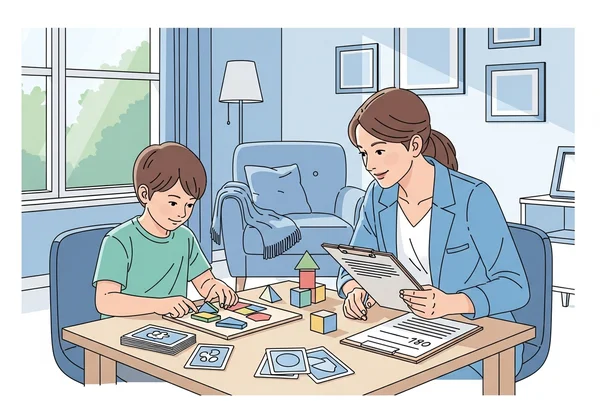
The Role of Observation, Interview, and Medical History
No single score seals a diagnosis. Experts pull from many sources to form a conclusion. The evaluation will almost always include:
- Direct Observation: The professional will observe your body language, eye contact, use of gestures, and conversational patterns during your interactions.
- In-Depth Interview: You will be asked detailed questions about your friendships, your understanding of social rules, how you handle changes in routine, your sensory experiences, and your passions.
- Review of History: The clinician will review your medical, developmental, and family history to get a complete picture and rule out other possible explanations for your traits.
Navigating Autism Assessment Costs & Post-Diagnosis Steps
Understanding the practical side of a diagnosis—like the cost and what to do afterward—is a crucial part of the journey. This knowledge can help you plan effectively and feel empowered to move forward.
Typical Costs of a Professional Autism Assessment
The cost of a professional autism assessment can vary significantly, often ranging from $500 to $5,000 or more. The final price depends on several factors:
- Your Location: Costs can differ between cities and countries.
- Insurance Coverage: Some insurance plans cover diagnostic evaluations, while others may only cover a portion or none at all. Always call your provider beforehand to understand your benefits.
- The Provider: A private practice specialist may have different rates than a university clinic or hospital.
- The Complexity of the Evaluation: A more comprehensive assessment involving multiple specialists will cost more.
Don't let the potential cost stop you from exploring your options. Many clinics offer sliding scale fees based on income, and some universities have training centers that provide assessments at a lower cost.
Understanding Your Diagnosis: What Comes Next?
Receiving a diagnosis can bring a wave of emotions—relief, validation, and maybe some uncertainty. Remember, a diagnosis doesn’t change who you are; it gives you a new lens through which to understand yourself.
The next steps are about using this new information to build a more supportive and fulfilling life. This can involve exploring therapies, finding a community, and advocating for your needs at work or school. It’s the beginning of a new chapter in self-awareness. To get a foundational understanding of your own traits, an online autism test can be a powerful first step.
Resources and Support After an Autism Diagnosis
You are not alone. A global community and a wealth of resources are available to support you after a diagnosis. Here are some avenues to explore:
-
Therapy and Support Services: Options like speech therapy, occupational therapy, and cognitive-behavioral therapy (CBT) can help develop social skills and coping strategies.
-
Support Groups: Connecting with other autistic adults or parents of autistic children can provide a sense of community and shared understanding. These can be found both online and in person.
-
National and Local Autism Organizations: Groups like the Autistic Self Advocacy Network (ASAN) and the Autism Society of America offer valuable information, resources, and advocacy.
-
Online Communities: Social media platforms and forums host vibrant communities where autistic individuals share experiences and advice.
Ready for Clarity? Your Next Steps Start Here
Getting a formal diagnosis might feel big, but it's often the key to real understanding and support. You've got this—start with our quick autism test to build your case.
Screening like ours gives you solid info to share with a doctor—quick, private, and insightful. It's the perfect first step before you have a conversation with a healthcare provider.
Wondering if your traits align with autism? Take our free test now and get the clarity you need to move forward.
Frequently Asked Questions About Autism Diagnosis
Are online autism tests accurate for diagnosis?
No, online autism tests are not a substitute for a professional diagnosis. They are best described as screening tools. They can accurately indicate the presence of autistic traits, suggesting that a formal evaluation with a qualified professional may be beneficial. Think of them as a first step, not a final answer.
What does a high score on an online autism test truly mean?
A high score means that you have reported experiencing a significant number of traits commonly associated with Autism Spectrum Disorder. It is an indicator that further exploration is warranted. It provides a solid reason to speak with a doctor or a mental health professional about a comprehensive diagnostic evaluation.
Can I self-diagnose autism after an online screening?
While many people in the autistic community find validation in self-identification based on thorough research and online screenings, it is not the same as a formal diagnosis. A professional diagnosis is required to access legal accommodations, insurance-covered therapies, and other support services. An online screening can be a key part of your self-discovery process, and you can get a preliminary insight on our website.
How much does a professional autism assessment typically cost?
The cost can vary widely, generally ranging from several hundred to several thousand dollars. The final price depends on your location, your insurance coverage, and the specific clinician you see. It is essential to contact both your insurance provider and the assessment clinic beforehand to get a clear estimate of the costs involved.