Early Signs of Autism in Babies by Month
Parents often search for early signs of autism in babies because something feels different in daily interaction: a baby may not look toward a voice, may rarely share smiles, or may seem unusually upset by sound, touch, or change. These observations deserve care, but they do not prove anything on their own. Babies develop unevenly, and many delays have more than one possible explanation. This guide is an educational way to organize what you see from about 2 to 12 months, so you can talk with your baby's pediatrician with clearer examples. For older family members reflecting on their own traits, an educational autism traits screening resource can also support self-understanding, but babies need pediatric guidance rather than an online self-test.
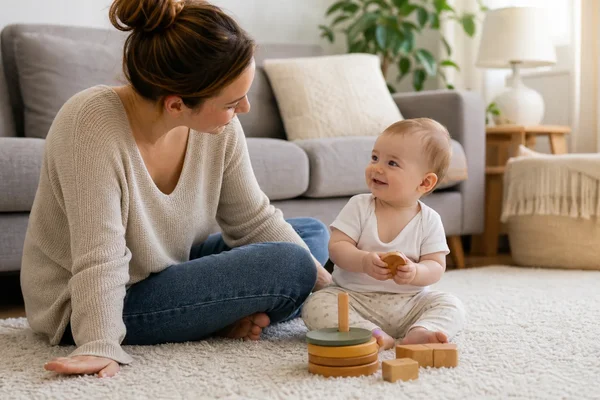
What Counts as an Early Sign in a Baby
An early sign is usually a pattern, not a single moment. A tired baby may avoid eye contact. A baby with an ear infection may not turn toward a voice. A baby who is hungry, overstimulated, or temperamentally quiet may seem less socially engaged on some days. The question is whether several patterns repeat across settings, caregivers, and weeks.
Early autism-related differences often involve social communication, shared attention, sensory responses, movement patterns, or repetitive actions. In infancy, these may look subtle because babies are still learning how to use their eyes, voices, hands, and bodies to connect with other people. That is why a month-by-month view is more useful than a simple yes-or-no checklist.
Use the ideas below as conversation notes. Write down what happened, when it happened, how often you see it, and whether it changes with sleep, illness, noise, or routine. A pediatrician can help decide whether your child needs hearing checks, developmental screening, early intervention referral, or continued monitoring.
Early Signs of Autism in Babies at 2 to 4 Months
In the first few months, babies are still very young, so signs are usually about social responsiveness rather than clear autism-specific behavior. Around 2 months, many babies begin to calm to familiar voices, briefly watch faces, or show early social smiles. A possible concern is not the absence of one smile on one day, but a consistent lack of warm back-and-forth engagement.
At 3 months, parents may notice whether a baby follows movement with their eyes, responds to playful faces, or seems interested in people during feeding and cuddling. Early signs of autism in babies 3 months old might include very limited eye contact, rare social smiling, little response to a caregiver's voice, or unusual stiffness or floppiness that affects interaction.
At 4 months, many babies become more expressive. They may smile to get attention, copy some facial expressions, or turn toward sound. Early signs of autism in babies 4 months old may include limited interest in faces, little vocal play, not seeming to enjoy social games, or being unusually hard to soothe when routines or sensory input change.
These signs can also appear with vision, hearing, feeding, sleep, or motor concerns, so the practical next step is not to label the baby. It is to collect examples and ask for a developmental check.

Early Signs of Autism in Babies at 6 to 7 Months
By 6 months, social differences may become easier to describe. Many babies respond with smiles, sounds, reaching, or excited body movement when a familiar person approaches. Early signs of autism in babies 6 months old may include few or no big smiles, limited warm facial expressions, reduced back-and-forth sounds, or little interest in social play such as peekaboo.
At 7 months, parents may also notice how a baby reacts to their name, everyday sounds, and shared routines. Signs of autism in babies 7 months old can include not turning toward a familiar voice, seeming more focused on objects than people, limited copying of sounds or expressions, or strong distress around certain textures, noises, lights, or transitions.
This is also the age when differences in sensory regulation can stand out. Some babies appear unusually sensitive to sound or touch; others seem under-responsive and do not react much to social input that usually catches a baby's attention. Sensory differences alone do not identify autism, but they are worth mentioning when they appear with reduced social engagement.
If you are comparing observations across family members, keep the focus on the baby rather than on family blame. Older caregivers who are curious about their own patterns can use an adult-focused AQ-50 style screening tool for reflection, while the baby's care should stay with pediatric and early-childhood professionals.
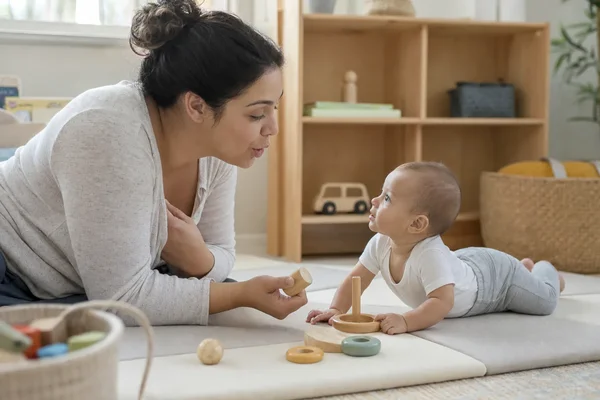
Early Signs of Autism in Babies at 9 to 12 Months
From 9 to 12 months, the biggest clues often involve shared attention. Shared attention means the baby uses looks, sounds, gestures, or body movement to connect another person with something interesting. A baby might look at a toy, look back at a parent, smile, and reach. This back-and-forth is an important building block for communication.
Early signs of autism in babies 9 months old may include limited babbling, little response to name, reduced eye contact during play, few attempts to share interest, or a preference for repetitive object play over social interaction. Some babies may watch spinning wheels, lights, or moving parts for long periods. Others may seem content alone and rarely seek comfort or attention in expected ways.
By 12 months, many babies use gestures such as pointing, reaching, waving, showing objects, or lifting arms to be picked up. Early signs of autism in babies 12 months old may include no babbling, no pointing or showing, limited gestures, little imitation, not looking where someone points, or losing social or communication skills that had started to appear.
Skill loss is especially important to discuss promptly. If a baby stops using sounds, gestures, eye contact, or social behaviors that were previously consistent, contact your pediatrician and describe the change clearly.
The Three Patterns Parents Should Watch Most Closely
Parents often ask, "What are the top 3 signs of autism?" In babies, it is better to think in patterns rather than rank one sign above all others.
First, watch for reduced social reciprocity. This may look like limited shared smiles, little back-and-forth vocal play, reduced interest in faces, or not seeking comfort in familiar ways.
Second, watch for delayed or limited communication gestures. This may include little babbling by later infancy, not responding to name, not pointing, not showing objects, or not using eye gaze to share attention.
Third, watch for restricted, repetitive, or unusual sensory patterns. Examples may include repeated focus on parts of objects, unusual hand or body movements, intense distress with certain sounds or textures, or unusually low response to social input.
The biggest red flag is not one isolated behavior. It is a repeated cluster of social communication differences, especially if your baby also shows skill loss or misses expected communication milestones.
What Else Can Look Similar
Many situations can resemble early autism-related signs. Hearing differences can make a baby seem unresponsive to name or voice. Vision concerns can affect eye contact or tracking. Prematurity can shift milestone timing. Sleep problems, reflux, feeding difficulties, seizures, motor delays, and high stress in the environment can also affect social engagement.
Temperament matters too. Some babies are quiet observers; others are intense, sensitive, or slow to warm. A quiet temperament alone is not the same as a developmental concern. The useful question is whether the baby can engage socially when rested, comfortable, and supported.
This is why examples are more helpful than conclusions. Instead of saying, "I think my baby has autism," you might say, "For the last six weeks, she rarely turns when we call her name, does not look back and forth between us and toys, and has stopped babbling as much as she did last month." That gives a clinician concrete information to work with.
A Parent Observation Checklist
Use this checklist for one to two weeks before an appointment, unless you see skill loss or another urgent concern. In that case, call sooner.
- Does my baby respond to familiar voices or their name in quiet settings?
- Does my baby share smiles, sounds, or facial expressions during relaxed play?
- Does my baby look between a caregiver and an object of interest?
- Does my baby use gestures such as reaching, showing, waving, or pointing when age-appropriate?
- Does my baby imitate sounds, faces, or simple actions?
- Does my baby seek comfort from familiar caregivers?
- Are there repeated sensory reactions to sound, light, touch, clothing, food textures, or transitions?
- Are there repetitive movements or object-focused behaviors that happen often?
- Has my baby lost any social, movement, sound, or gesture skill that was previously present?
Bring notes, short videos, and milestone questions to the visit. Videos can be useful because babies do not always show the same behavior during an appointment.
When to Talk With a Pediatrician
Talk with your pediatrician whenever you have a persistent concern, even if your baby is younger than the typical age for autism-specific screening. You do not need to wait until toddlerhood if you are seeing repeated delays, skill loss, or a cluster of social communication differences.
A pediatrician may check hearing and vision, review growth and sleep, ask about feeding and movement, use a developmental screening tool, or refer your child to early intervention services. Early support can help with communication, play, sensory regulation, and parent coaching even before every question has a final answer.
If your baby is 12 months or older and is not babbling, not using gestures, not responding to name, or not sharing attention, ask directly about developmental screening and referral options. If your child is 18 to 24 months, autism-specific screening is commonly discussed as part of routine developmental care.
What to Do If You Notice Several Signs
If several early signs of autism in babies appear together, start with calm documentation. Keep a dated note of what you see, when it happens, what helps, and whether skills are increasing, staying the same, or decreasing. Record short videos of social play, name response, feeding, sensory reactions, and attempts to communicate.
Then make an appointment and use direct, concrete language. You might say, "I am concerned about social communication and name response. I brought examples and would like to discuss developmental screening or early intervention." If you feel dismissed but your concerns continue, it is reasonable to seek a second professional opinion.
For parents and older caregivers, reflecting on family traits can also be useful. Autism can run in families, and adults sometimes recognize their own communication, sensory, or routine patterns while learning about a child. If that is part of your situation, private autism traits self-screening for adults can be a low-pressure way to organize self-reflection, while your baby's next steps should remain centered on pediatric care.

FAQ
What is the biggest red flag for autism in a baby?
The biggest red flag is a repeated cluster of social communication differences, especially reduced shared smiles, limited response to name, few gestures, little back-and-forth vocal play, or loss of skills that were previously present. Any skill loss should be discussed with a pediatrician promptly.
At what age is autism usually noticed?
Some parents notice differences during the first year, especially around social response, eye contact, babbling, gestures, or sensory regulation. Many clearer concerns appear between 12 and 24 months as communication and shared attention expectations increase.
What are early signs of autism in babies at 3 months?
At 3 months, possible concerns include very limited eye contact, rare social smiling, little response to a familiar voice, reduced interest in faces, or unusual body tone that affects interaction. These signs are not specific on their own, so they should be discussed as part of overall development.
What are early signs of autism in babies at 6 months?
At 6 months, parents may notice few big smiles, limited warm facial expressions, reduced back-and-forth sounds, low interest in social games, or unusual sensory reactions. A pattern across several situations matters more than one missed behavior.
How do I know if my baby will have autism?
You cannot know from one behavior or from an online article. What you can do is track patterns, record examples, ask for developmental screening, and follow up if concerns continue. A qualified professional can guide next steps based on your baby's full development.
Can early signs appear at 2 or 4 months?
Some early differences may be noticed at 2 or 4 months, such as limited social smiling, little response to voices, or reduced interest in faces. At these ages, many other explanations are possible, so the best response is observation plus pediatric discussion.
Are signs of autism in toddlers age 1 different from baby signs?
At age 1, signs often involve gestures, name response, imitation, babbling, pointing, showing objects, and shared attention. In younger babies, signs are usually subtler and may involve eye contact, social smiling, sensory regulation, and early vocal back-and-forth.