Autism Sensory Processing: Strategies for Overload & Sensitivities
Feeling overwhelmed by everyday sights, sounds, or textures? If the bright lights of a supermarket feel like a spotlight, the hum of a refrigerator sounds like an engine, or the tag on a shirt feels unbearable, you are not alone. Many individuals on the autism spectrum experience the world through a unique sensory lens, which can make daily life a significant challenge.
These sensory processing differences are a core aspect of autism for many people. Understanding them is the first step toward creating a more comfortable and manageable world. This guide will explore common autism sensory sensitivities and provide practical, actionable strategies to handle sensory overload.
Whether you are exploring these feelings for the first time or seeking to better understand your experiences, gaining clarity is key. An online screening can be a valuable starting point. If you're wondering if your sensory experiences are related to autistic traits, you can start your test to gain initial insights.

Understanding Autism Sensory Sensitivities
For many autistic individuals, the brain processes sensory information differently. This isn't about having better or worse senses; it's about the brain's response to the signals it receives. This can lead to intense reactions that may seem confusing to others but are very real for the person experiencing them.
What is Sensory Processing Disorder in Autism?
Sensory processing refers to how our nervous system receives messages from the senses and turns them into appropriate motor and behavioral responses. For most people, this process is automatic. We filter out irrelevant background noises and tune into a conversation. We can wear different clothing textures without much thought.
In autism, sensory filtering works differently. Background noise that’s minor to one person might overwhelm another. This is often called Sensory Processing Disorder (SPD), where the brain struggles to process signals from the senses. While not exclusive to autism, it is extremely common among autistic people.
Common Sensory Profiles: Hypersensitivity vs. Hyposensitivity
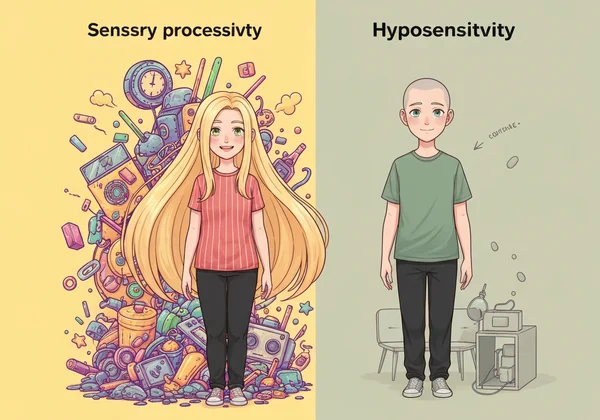
Sensory experiences in autism are not one-size-fits-all. They typically fall into two main categories: being over-responsive (hypersensitive) or under-responsive (hyposensitive). An individual can also experience a mix of both across different senses.
-
Hypersensitivity (Over-Responsive): This is when a person is highly sensitive to sensory input. Everyday stimuli can feel intense, overwhelming, or even painful.
- Examples: Finding fluorescent lights too bright, being distressed by sudden loud noises like a vacuum cleaner, feeling discomfort from light touch, or having a strong negative reaction to certain food textures or smells.
-
Hyposensitivity (Under-Responsive): This is when a person is less sensitive to sensory input and may seek out more intense experiences to feel regulated.
- Examples: Craving loud music or environments, enjoying deep pressure like tight hugs or weighted blankets, having a high pain tolerance, or seeking out strong flavors and smells.
How Sensory Challenges Impact Daily Life
When your sensory world is out of sync, it can affect everything. Simple tasks can become exhausting ordeals. A trip to the grocery store isn't just about buying food; it's about navigating bright lights, overlapping announcements, cart wheels squeaking, and a hundred other stimuli.
This constant sensory bombardment can lead to anxiety, stress, and fatigue. It can cause social withdrawal as individuals avoid overwhelming situations. For children, it might manifest as picky eating due to texture sensitivity or behavioral outbursts when they can no longer cope with the sensory input—often called a meltdown. Understanding these triggers is crucial for building a supportive environment.
Actionable Strategies for Managing Sensory Overload
The good news is that you can manage sensory overload. The goal is not to eliminate sensory experiences but to regulate them. By identifying your unique sensory profile, you can create strategies that help you feel more in control and comfortable in your environment.
Visual Sensory Strategies: Light, Patterns, & Clutter
For those sensitive to light and visual clutter, the world can feel chaotic. We know fluorescent lights can feel like a battlefield, so try these strategies daily.
- Control Lighting: Wear sunglasses outdoors, even on cloudy days. At home, use lamps with warm bulbs instead of harsh overhead fluorescent lights. Consider installing dimmer switches.
- Reduce Clutter: An organized, minimalist space can be very calming. Use storage boxes to hide clutter and try to keep surfaces clear.
- Filter Screens: Use blue light filters on your phone and computer screens, or adjust the brightness settings to a comfortable level.
Auditory Sensory Strategies: Noise, Sounds, & Environments
Unexpected or constant noise is a common trigger for sensory overload.
- Use Headphones: Noise-canceling headphones are a powerful tool for blocking out overwhelming sound. You can also use earplugs in loud places like cinemas or shopping centers.
- Create Quiet Spaces: Designate a room or corner in your home as a quiet zone where you can retreat when needed.
- Choose Your Timing: If possible, run errands during off-peak hours when stores are less crowded and noisy.
Tactile & Olfactory Strategies: Touch, Textures, & Scents
Sensitivities to touch and smell can impact clothing, food, and personal care.
- Clothing Comfort: Cut tags out of clothing. Choose soft, natural fabrics like cotton. Seamless socks and tagless shirts can make a world of difference.
- Respect Personal Space: Let others know if you are uncomfortable with light touch or unexpected hugs. Many autistic people prefer deep, firm pressure instead.
- Control Scents: Use unscented detergents and soaps. Avoid places with strong perfumes or chemical smells. You can use calming essential oils like lavender at home if you find them pleasant.
Proprioceptive & Vestibular Strategies: Movement & Body Awareness
These senses are related to body awareness and balance.
-
Proprioceptive Input (Body Awareness): This involves deep pressure. Activities like using a weighted blanket, getting a firm hug, or doing strenuous exercise like pushing or pulling can be very calming.
-
Vestibular Input (Balance & Movement): This sense is located in the inner ear. Gentle, rhythmic movements like rocking in a chair, swinging, or gentle bouncing on an exercise ball can help regulate the nervous system.

Creating a Sensory-Friendly Environment (Home & Work)
You can transform your personal spaces into sensory havens. At home, combine the strategies above to create a "sensory nook" with dim lighting, a comfortable chair, a weighted blanket, and headphones. At work, discuss reasonable accommodations with your employer, such as moving your desk to a quieter location, being allowed to wear headphones, or having the lights above your desk turned off. Understanding your needs is the first step to advocating for them, and an online autism screening can help you articulate these patterns.

Using Online Autism Tests to Understand Your Sensory Profile
If you relate to many of these sensory challenges, you may wonder what it all means. Online screening tools can provide valuable insights by helping you connect your experiences to common autistic traits.
Recognizing Sensory Traits in Online Screening Questions
Many autism screening questionnaires, including our free autism test, include questions that directly address sensory processing. You might see questions like:
- "Do you tend to notice details that others do not?"
- "Are you fascinated by lights or spinning objects?"
- "Do you find it difficult to focus in environments with multiple sounds?"
These questions are designed to identify patterns of sensory hypersensitivity and hyposensitivity. Answering them can help you see your experiences not as isolated quirks but as part of a consistent profile.
How Results Can Guide Your Sensory Support Journey
Receiving the results from an online screening is not a diagnosis. Instead, think of it as a personalized guide. If your results indicate a high likelihood of autistic traits, it can validate your sensory experiences and empower you to explore them further.
The results can act as a starting point for your self-discovery. They can give you the confidence to try the sensory strategies mentioned in this article, knowing they are tailored for a neurotype similar to yours. This knowledge can also be the first step toward seeking a professional evaluation if you choose to do so.

Taking the Next Step: Embracing Your Sensory Needs
Your sensory experiences matter—tuning into them isn’t just helpful, it’s essential. Start by honoring what feels overwhelming or comforting to you. If you're ready to explore whether your sensory sensitivities are part of a broader pattern of autistic traits, a reliable screening tool can provide the clarity you need.
Take our free online test today to better understand your unique profile and begin your journey toward sensory well-being.
The Takeaway
Are online autism tests accurate for identifying sensory sensitivities?
Online autism tests are screening tools, not diagnostic instruments. They cannot provide a medical diagnosis. However, they are designed to identify patterns of traits commonly associated with autism, including sensory sensitivities. A good screening tool can accurately highlight if your responses align with the sensory profiles of many autistic individuals, making it a highly useful first step for self-understanding.
What are common early signs of sensory issues in children with autism?
In children, early signs of sensory issues can include extreme reactions to everyday sounds (covering ears), being a very picky eater (often due to texture), avoiding messy play like finger painting, having a high pain tolerance, or constantly needing to be in motion (seeking vestibular input). They may also chew on non-food items or be fascinated with spinning objects.
What does a high score on an autism test mean regarding sensory processing?
A high score on an online autism test suggests that you share many traits with autistic individuals. Regarding sensory processing, it strongly indicates that your sensory experiences—whether hypersensitive or hyposensitive—are significant and likely impact your daily life. This result can validate your feelings and encourage you to explore sensory management strategies. You can learn more by using our screening test.
How can sensory sensitivities differ in autistic women or adults?
Autistic women and adults who were not diagnosed as children often develop sophisticated "masking" or "camouflaging" techniques. They may have learned to suppress their outward reactions to sensory overload to fit in socially. However, the internal cost is high, often leading to exhaustion, anxiety, or burnout. Their sensitivities might be less obvious to others but are just as intense internally.
What should I do after taking an online autism test and recognizing sensory challenges?
After testing, prioritize self-compassion. Notice your experiences without judgment. Test one sensory strategy from this guide—like dimming lights or using noise-canceling headphones—to find what works. You can use your results as a guide for self-exploration and as a starting point for a conversation with a doctor or mental health professional if you wish to pursue a formal diagnosis.