Autism & Co-occurring Conditions: Identifying Anxiety, ADHD & OCD with ASD
When the results of an autism screening raise more questions than answers, you might discover your experience doesn't fit neatly into one box. The reality is that autism rarely exists in isolation. Research shows a high percentage of autistic individuals also have at least one co-occurring condition, creating a complex picture that can make self-understanding difficult.
Have you recently taken an online screening and find yourself wondering: Is this autism, something else, or both? We've created this guide to help you navigate the connections between autism and frequently co-occurring conditions like anxiety, ADHD, and OCD. Understanding these overlaps can empower you to better interpret your results and decide on your next steps.
This journey often begins with an initial screening, like the online autism test we offer. It provides valuable preliminary insights, helping you start a more meaningful conversation with yourself or a healthcare professional.
The Complex Link Between Autism and Co-occurring Conditions
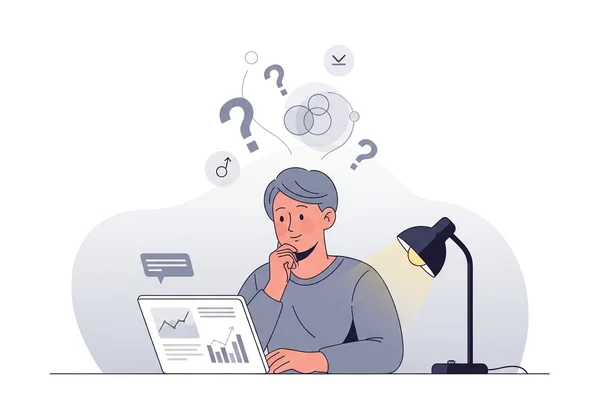
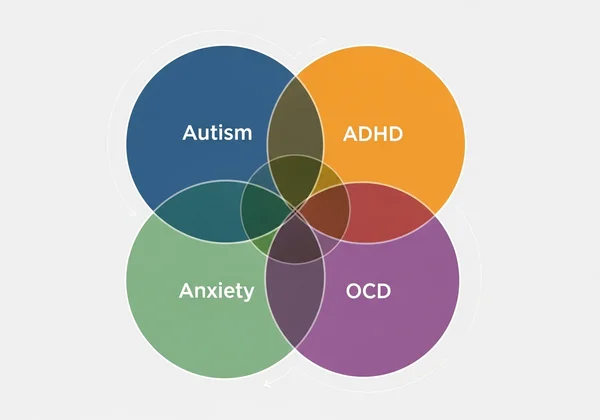
Exploring the connection between autism and other conditions is a crucial step toward clarity. This overlap, known as comorbidity or co-occurrence, is more common than many people realize. This means an individual can have two or more distinct conditions simultaneously. These conditions influence each other, which can complicate diagnosis, treatment planning, and daily functioning.
In the context of autism, co-occurring conditions are separate medical or psychiatric conditions diagnosed alongside Autism Spectrum Disorder (ASD). They aren't symptoms of autism but distinct disorders with their own diagnostic criteria, such as ADHD, anxiety, and OCD.
Studies show that a significant majority of autistic individuals have at least one other condition. For instance, up to 70% of people with autism also meet the criteria for ADHD, and anxiety disorders are found in about 40% of autistic individuals. Experiencing traits of multiple conditions isn't unusual; it's a common part of the neurodivergent experience.
Why do these conditions co-occur so often? Researchers believe shared genetics and overlapping neurobiology play a role. The brain pathways related to attention, emotional regulation, and social processing might be affected similarly across these conditions. Additionally, the daily stress of navigating a world not built for autistic minds can contribute to developing anxiety or depression.
Differentiating Autism from Anxiety: Shared and Unique Signs
Distinguishing between social difficulties from autism and those from social anxiety can be tricky. Both can lead to avoiding social situations, but the reasons are often very different.
Social Anxiety vs. Autism's Social Differences
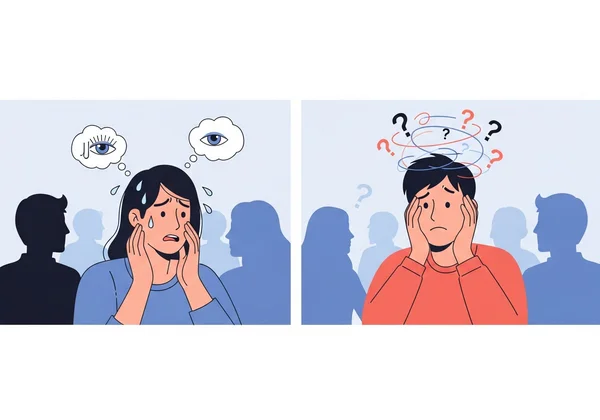
A person with social anxiety typically fears negative judgment. They might understand social cues but worry excessively about saying the wrong thing. Their desire to connect is strong, but it's blocked by intense fear.
In contrast, an autistic person may find social interaction inherently confusing or exhausting. They might miss subtle social cues or find small talk unnatural. The avoidance stems not from fear of judgment, but from the cognitive effort required or a simple preference for solitude. A preliminary autism screening test can help identify traits related to these social differences.
Anxiety can also complicate the presentation of autism. For example, the stress of trying to "fit in" can lead an autistic person to "mask" their natural behaviors, which is mentally draining and can be mistaken for social anxiety. Conversely, sensory sensitivities common in autism—like being overwhelmed by loud noises—can trigger an anxiety response.
Autism and ADHD: An Overlap That Confuses Many
The connection between autism and ADHD is one of the most frequently discussed overlaps, especially for adults seeking a late diagnosis. Both conditions can affect focus, organization, and social interactions.
Executive Function: Shared Ground Between Autism and ADHD
Executive functions are the mental skills we use to manage time, pay attention, and organize tasks. Both autistic individuals and those with ADHD can struggle with this, leading to procrastination, trouble switching between activities, and poor time management.
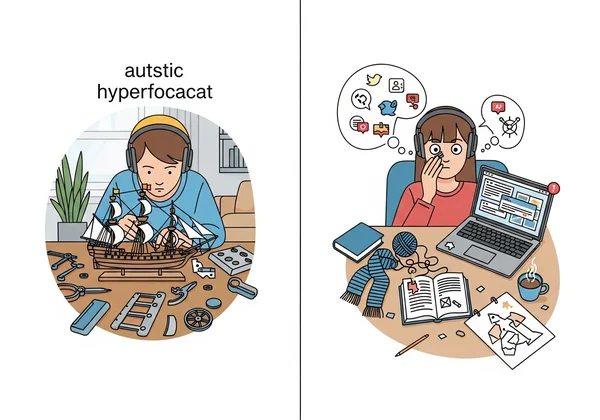
While there is much overlap, key distinctions offer clarity. A person with ADHD may be easily distracted from uninteresting tasks, shifting attention frequently. An autistic person, on the other hand, may develop intense, deep interests ("special interests") and can hyperfocus on them for hours, finding it difficult to shift their attention away.
Socially, someone with ADHD might be impulsive, interrupting others without meaning to be rude. An autistic person’s social challenges are more often related to interpreting nonverbal cues or understanding social norms. Getting a baseline from a screening tool, which you can do with our free autism test, can be a helpful start.
Autism and OCD: Repetitive Behaviors and Routines
Repetitive behaviors and a need for routine are hallmark traits of both autism and Obsessive-Compulsive Disorder (OCD), which can make them difficult to tell apart without looking at the motivation behind the behaviors.
Rituals: Where Autism and OCD Converge
For an autistic person, routines provide comforting structure in a world that can feel chaotic. These routines and repetitive movements, or "stimming," are often self-soothing and help regulate sensory input or express emotion.
Similarly, a person with OCD performs compulsions or rituals. The core difference is motivation. In OCD, the repetitive behaviors (compulsions) are driven by intrusive, unwanted thoughts (obsessions) to relieve intense anxiety. The ritual itself provides no pleasure and is often distressing. For an autistic person, repetitive behaviors and engagement with special interests are typically enjoyable and calming, driven by a genuine interest or need for consistency.
How Screening Tests Help with These Complexities
With so much overlap, where do you start? Online screening tools are designed to be a first step, helping you identify traits that may suggest autism.
It’s important to be realistic about what an online screening can do. Tools like the online autism test measure the quantity of autistic traits you report. They are not built to diagnose autism or differentiate it from co-occurring conditions like ADHD or anxiety.
A high score suggests that further evaluation may be beneficial. If you also recognize strong signs of anxiety, ADHD, or OCD in yourself, this doesn't invalidate the results. Instead, it adds another layer to your story. Use this knowledge to have a more detailed conversation with a healthcare professional who can conduct a thorough diagnostic evaluation.
Making Sense of Your Results and Next Steps
Understanding how autism connects with conditions like anxiety, ADHD, and OCD isn't just theoretical—it's crucial for self-understanding and finding the support you need. The overlaps are complex, but recognizing them is the first step toward clarity.
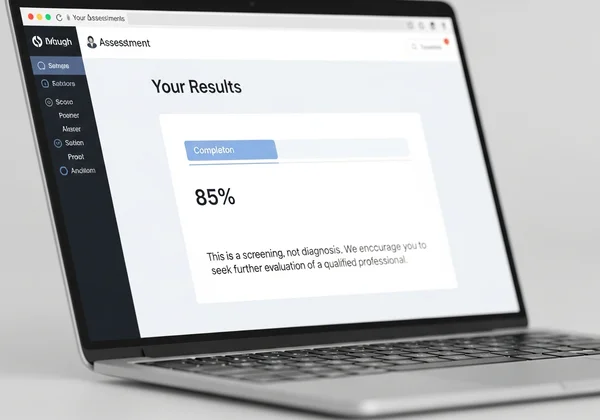
While screening tools cannot provide a diagnosis, they offer a structured way to explore your traits and provide a data point to begin your journey. Your results can be a starting point for a meaningful discussion with qualified professionals who can provide the nuanced evaluation you deserve.
Ready to gain some initial insights? Take our free tool today to begin your journey of understanding. This is a step toward empowerment, equipping you with the information you need to move forward with confidence.
The Takeaway
Can someone have both autism and anxiety?
Yes, absolutely. It is very common for autistic individuals to also have an anxiety disorder. The constant effort of navigating social situations and dealing with sensory sensitivities can contribute to anxiety. Both conditions can be formally diagnosed and supported simultaneously.
How do I know if I have autism or ADHD?
This is a common question, as the overlap is significant. Key differences often relate to social motivation and patterns of attention. A professional evaluation is the best way to differentiate them, as a clinician can look at your developmental history and specific challenges. Starting with an online screening tool can help you identify traits to discuss with a professional.
Does an autism test screen for co-occurring conditions?
Most online autism screening tests are designed specifically to measure autistic traits. They do not screen for ADHD, anxiety, or OCD. A high score suggests further investigation for autism is warranted, which may also uncover co-occurring conditions during a professional assessment.
What should I do if I think I have autism and another condition?
If you suspect you have autism along with another condition, the best course of action is to seek a comprehensive evaluation from a healthcare provider experienced in neurodevelopmental disorders. Bring your screening results and a list of all the traits and challenges you've noticed to help them get a complete picture.
Can treating anxiety improve life with autism?
Treating a co-occurring condition like anxiety won't "cure" autism, but it can significantly improve an autistic person's quality of life. By managing anxiety, you may feel more capable of handling social situations, have more energy to engage in your interests, and experience less sensory overwhelm. This makes it easier to thrive as your authentic, autistic self.